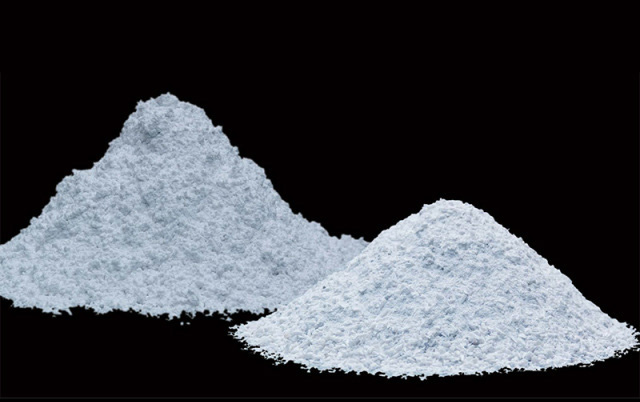
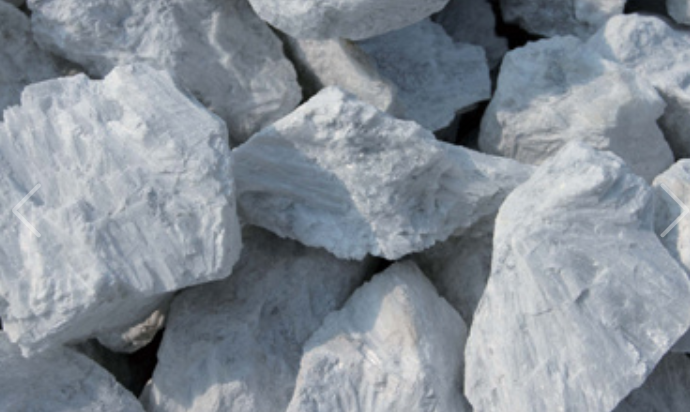
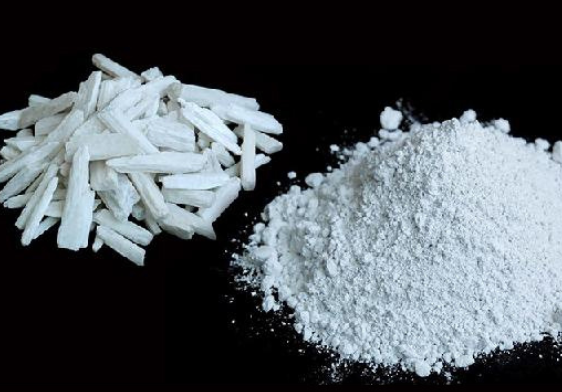
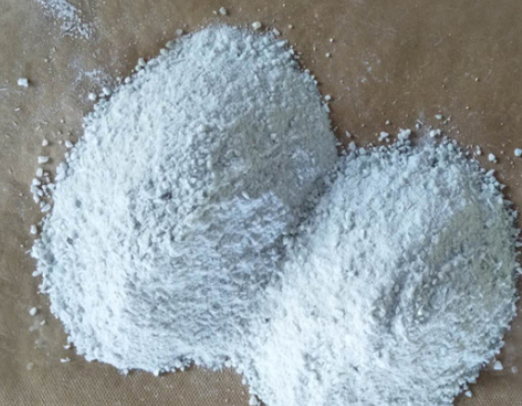
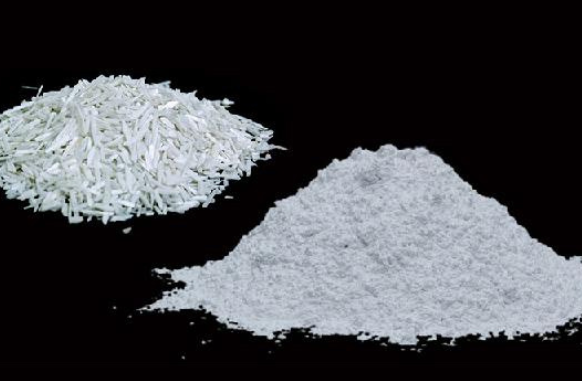
Product Description
Wollastonite is a typical metamorphic mineral mainly formed in the contact zone between acidic rocks and limestone. It also occurs in deep-metamorphic calcareous crystalline schists, volcanic ejecta, and some alkaline rocks.
Chemical Formula: CaSiO₃
Structural Formula: Ca₃[Si₃O₉]
Theoretical Composition: CaO 48.25%, SiO₂ 51.75%
Wollastonite belongs to the chain silicate group (inosilicate) with a triclinic crystal system. It usually appears as fine, platy, radiating, or fibrous aggregates. Its unique crystalline structure gives it excellent physical and chemical properties.
Key Properties
- Non-toxic, acid- and alkali-resistant
- Low moisture and oil absorption
- Low electrical conductivity and excellent insulation
- High whiteness
- Good thermal and dimensional stability
- Superior mechanical and electrical performance
🌱 A natural, green, low-carbon, and energy-saving industrial mineral material
Applications
- Ceramic and glass industries
- Paints, coatings, and plastics as functional filler
- Friction materials and welding electrodes
- Construction materials and insulation products
- Metallurgical flux and environmental materials
Technical Specifications
Chemical Composition (%)
| Component | Grade A | Grade B | Grade C |
|---|---|---|---|
| SiO₂ | 48–53 | 47–52 | 47–54 |
| CaO | 43–45 | 38–42 | 35–40 |
| Al₂O₃ | 0.15–0.30 | 0.15–0.30 | 0.15–0.30 |
| Fe₂O₃ | 0.20–0.30 | 0.30–0.50 | 0.50–0.60 |
| TiO₂ (Max) | 0.02 | 0.02 | 0.02 |
| MgO | 0.5–1.2 | 0.5–1.5 | 0.5–2.0 |
| S (Max) | 0.02 | 0.03 | 0.03 |
| P (Max) | 0.007 | 0.007 | 0.007 |
| L.O.I (1050°C) | 1–3 | 4–8 | 6–18 |
| pH | 9 | 9 | 9 |
Physical Properties
Particle Size
80 – 6000 mesh
Aspect Ratio (L:D)
3:1 – 25:1
Sedimentation Value
40 – 150 ml/200mg
Oil Absorption
20 – 55 g/100g
Whiteness
75 – 92%
Refractive Index
1.63
Density
2.95 g/cm³
Thermal Expansion
6.5 × 10⁻⁶ mm/mm·°C
Melting Point
1450°C
Hardness (Mohs)
4.5 – 5.0
📦 Packaging
Standard packaging in bags or jumbo bags as per customer requirements
Custom packaging and particle sizes available upon request
⚠ Storage & Handling
Store in a cool, dry, and well-ventilated area. Avoid moisture and excessive dust formation during handling.